

K-WANG


Xycom 81987-001/81987-001-D Universal I/O Board
Xycom 81987-001/81987-001-D Universal I/O Board
Product Overview
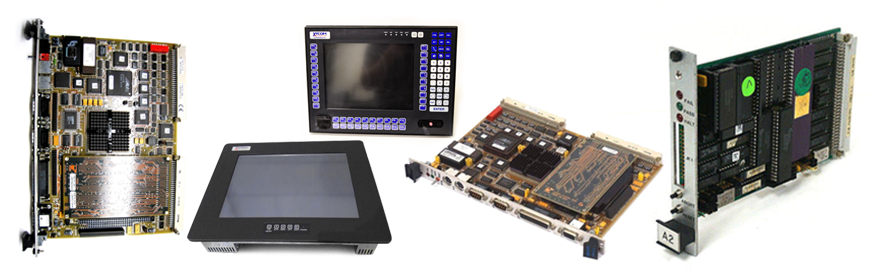
Xycom 81987 - 001/81987 - 001 - D Universal I/O Board It is a widely used general-purpose input/output board in the field of industrial automation, manufactured by the well-known Xycom company in the industry. This board is designed to provide flexible and reliable I/O interface solutions for various industrial control systems, which can adapt to various industrial equipment and system architectures, and help achieve efficient data exchange and device control. It plays a key role in industrial production process monitoring, equipment automation control, and other scenarios.
Specification parameters
Interface type and quantity
Digital Input (DI): Equipped with 16 digital input channels, it can be connected to proximity switches, buttons, relay contacts, and other devices to collect switch status, position signals, etc. of the equipment. These channels support multiple level standards, such as 24V DC, 48V DC, etc., to meet the signal requirements of different industrial sites and accurately introduce external digital signals into the board for processing.
Digital Output (DO): Equipped with 16 digital output channels, it can drive actuators such as relays, indicator lights, solenoid valves, etc., to achieve functions such as start stop control and status indication of industrial equipment. The output channel has strong driving capability and can withstand a certain load current to ensure stable operation of the actuator.
Analog Input (AI): It has 8 analog input channels and supports the acquisition of 0-10V voltage signals and 4-20mA current signals. Can connect analog output sensors such as pressure sensors, temperature sensors, flow sensors, etc., for real-time monitoring of various analog parameters in industrial production processes. The input channel has a high resolution, such as 12 or 16 bits, which can accurately collect changes in analog signals and provide accurate data feedback for the system.
Analog Output (AO): Provides 4 channels of analog output, capable of outputting 0-10V voltage signals or 4-20mA current signals, used to control devices such as regulating valves and frequency converters that require analog control signals. By outputting accurate analog signals, continuous adjustment of equipment operating parameters is achieved to ensure the stability and accuracy of industrial production processes.
Communication interface: The board integrates RS-232 and RS-485 serial communication interfaces, supporting multiple communication protocols such as Modbus RTU, making it convenient for data communication and interaction with other devices. The RS-232 interface is suitable for short distance, low-speed data transmission and is commonly used to connect debugging equipment, printers, etc; The RS-485 interface, with its strong anti-interference ability and long transmission distance, can build a distributed communication network for industrial sites and achieve network communication with multiple devices. In addition, some models may also be equipped with Ethernet interfaces that support TCP/IP protocol, enabling high-speed and long-distance data transmission, facilitating communication with upper computers or remote servers, and achieving remote monitoring and management.
Electrical performance
Working voltage: DC power supply is usually used, with a working voltage range of+24V DC ± 10%. It has good power supply adaptability and can operate stably under voltage fluctuations within a certain range. The board is equipped with a comprehensive power regulator circuit inside, which can effectively suppress power noise and interference, ensuring the normal operation of each circuit module.
Isolation feature: In order to improve the anti-interference ability of the board in complex industrial environments, electrical isolation technology is used for digital input/output channels, analog input/output channels, and communication interfaces. The isolation voltage of digital channels can generally reach 2500Vrms, the isolation voltage of analog channels can reach 1500Vrms, and the isolation voltage of communication interfaces can also meet corresponding industrial standards. Through isolation technology, external interference signals can be effectively prevented from entering the board, avoiding signal crosstalk between different circuits and improving the reliability and stability of the system.
Signal transmission rate: In terms of data transmission rate of communication interfaces, the highest transmission rate of the RS-232 interface can reach 115200bps, and the transmission rate of the RS-485 interface can be flexibly set between 9600bps and 1Mbps according to actual needs. The transmission rate of Ethernet interfaces depends on the interface specifications, commonly including 10Mbps and 100Mbps adaptive rates, which can meet the requirements of different application scenarios for data transmission speed. For analog input and output channels, their signal conversion rate is also fast, which can quickly respond to changes in external signals and achieve real-time control of industrial equipment.
Physical characteristics
Size specifications: Adopting a compact exterior design, the dimensions are approximately 160mm long, 100mm wide, and 20mm thick, making it easy to install inside industrial control cabinets or equipment with limited space. The compact size not only saves installation space, but also improves the compactness and aesthetics of system integration.
Installation method: Supports standard DIN rail installation, which can be easily and quickly installed on the rails of industrial control cabinets. The installation and disassembly process is simple, and it is easy to maintain and replace. At the same time, the board also provides screw fixing installation holes, and suitable installation methods can be selected according to actual needs to ensure that the board is installed firmly and reliably.
Circuit board material: The circuit board is made of high-quality glass fiber reinforced epoxy resin (FR-4) material, which has good electrical insulation performance, mechanical strength, and flame retardant properties. This material can effectively prevent electrical short circuits from occurring on the circuit board during operation, improving the durability and reliability of the circuit board. In harsh industrial environments such as high temperature, high humidity, and high dust, FR-4 material circuit boards can maintain stable performance and ensure the normal operation of the board.
Core functions
Data collection and processing: Real time collection of the operating status and various parameter data of industrial field equipment through rich digital and analog input channels. The digital input channel can quickly obtain digital information such as switch status and position signals of the device, while the analog input channel can accurately collect analog data such as pressure, temperature, and flow rate. The board integrates high-performance data processing units internally, which can perform real-time processing and analysis of collected data, such as data filtering, linearization processing, range conversion, etc. The processed data can be transmitted to the upper computer or other control systems through a communication interface, providing accurate data support for production decision-making and equipment control.
Equipment control: Utilizing digital and analog output channels to achieve precise control of industrial equipment. The digital output channel can control the on/off of relays, solenoid valves, and other equipment according to system instructions, thereby achieving basic control functions such as start stop and forward/reverse rotation of the equipment. The analog output channel achieves precise adjustment of equipment operating parameters by outputting continuously changing analog signals, adjusting the opening of regulating valves, the output frequency of frequency converters, etc. In industrial automation production lines, this board can collaboratively control the operation of multiple devices according to production process requirements, ensuring the efficient and stable operation of the production line.
Communication and networking: With the help of communication interfaces such as RS-232, RS-485, and Ethernet, communication and networking functions with other devices can be achieved. Through communication protocols such as Modbus RTU, data exchange can be carried out with devices such as PLCs, smart meters, sensors, etc., to build a distributed industrial control system. The existence of Ethernet interfaces enables the board to easily access enterprise networks, achieve communication with remote servers or upper computers, and facilitate remote monitoring and management of industrial production processes. Through communication and networking functions, industrial equipment scattered in different locations can be connected into an organic whole, achieving data sharing and collaborative work, and improving the intelligence level of industrial production.
Fault diagnosis and alarm: With comprehensive fault diagnosis and alarm functions, it can monitor the working status of the board itself and the signal situation of each channel in real time. Multiple fault detection circuits are installed inside the board, which can monitor power supply voltage, signal input and output status, communication links, etc. in real time. When abnormal situations are detected, such as power failure, channel short circuit or open circuit, communication interruption, etc., the board will immediately trigger an alarm mechanism to notify the operator through flashing indicator lights, outputting alarm signals, and other means. At the same time, the board will also store fault information in internal registers, making it convenient for maintenance personnel to troubleshoot and repair faults. The existence of fault diagnosis and alarm functions can effectively improve the reliability and maintainability of industrial control systems, reduce equipment downtime, and lower production losses.
Working principle
When the Xycom 81987-001/81987-001-D Universal I/O Board is connected to an industrial control system, it first collects the switch status signals of external devices through its digital input channel, and collects the analog signals output by sensors through its analog input channel. These input signals are preprocessed through interface circuits such as level conversion and filtering, and then transmitted to the data acquisition module inside the board. The data acquisition module converts analog signals into digital signals, performs preliminary processing on the digital signals, and then transmits the processed data to the data processing unit.
The data processing unit further analyzes, calculates, and processes the collected data according to preset algorithms and programs, such as data filtering, range conversion, fault diagnosis, etc. The processed data can be transmitted to the upper computer or other devices through communication interfaces according to system requirements, or control signals can be output through digital and analog output channels to drive external device actions.
During the communication process, the board establishes connections with other devices through RS-232, RS-485, or Ethernet interfaces, and follows the corresponding communication protocol for data transmission. For example, when using the Modbus RTU protocol, the board will package the data into frames for transmission and reception according to the format and rules specified in the protocol, and verify and parse the received data to ensure its accuracy and completeness.
At the same time, the fault diagnosis module inside the board continuously monitors the working status of various parts of the board, including power supply voltage, chip temperature, communication links, etc. Once an abnormal situation is detected, the fault diagnosis module will immediately trigger an alarm mechanism and record the fault information for subsequent processing. Through this workflow, the board realizes a series of key functions such as data acquisition, processing, transmission, and equipment control in industrial control systems.
Key advantages
High flexibility and versatility: With a diverse range of interface types and quantities, it can adapt to various types of industrial equipment and sensors, meeting the needs of different industrial application scenarios. This board can easily handle both simple digital control and complex analog monitoring and adjustment. Through software configuration, users can flexibly define the functions and parameters of each interface, achieve personalized control of different devices, and improve the universality and applicability of the board.
High reliability and stability: Designed and manufactured according to industrial standards, using high-quality components and undergoing rigorous quality testing and reliability testing. It can still work stably and reliably in harsh industrial environments such as high temperature, high humidity, and strong electromagnetic interference. The application of electrical isolation technology effectively improves the anti-interference ability of the board, ensuring the accuracy of data transmission and the stability of equipment control. The comprehensive fault diagnosis and alarm functions can timely detect and handle problems that occur during the operation of the board, reduce equipment failure rates, and ensure the continuity of industrial production.
Easy to integrate and expand: The compact size and standardized installation method make it convenient to integrate the board into various industrial control cabinets and equipment. At the same time, the board provides rich communication interfaces for easy communication and networking with other devices, making it easy to expand and upgrade the system. In industrial automation production lines, the number of boards can be flexibly increased or decreased according to production scale and process requirements to meet the production needs at different stages. In addition, Xycom provides comprehensive software development tools and technical support, which facilitates system integration and secondary development for users, reducing the difficulty and cost of system integration.
Efficient data processing capability: The board integrates high-performance data processing units internally, which can quickly process large amounts of input data and generate corresponding control signals according to preset algorithms and programs. In the industrial production process, facing real-time changes in equipment status and process parameters, this board can quickly respond and achieve real-time control and optimization adjustment of equipment. Efficient data processing capabilities not only improve the operational efficiency of industrial control systems, but also help enterprises improve production quality, reduce production costs, and enhance their market competitiveness.
Precautions
Installation operation: Before installing the board, it is necessary to ensure that the industrial control system is in a power-off state to avoid short circuits or other electrical accidents caused by live operation, which may damage the board and other equipment. During the installation process, strictly follow the installation instructions in the product manual to accurately install the board on the DIN rail or fix it in the installation position with screws, ensuring that all interfaces are tightly and firmly connected. Be careful to avoid applying excessive external force to the circuit board during installation to prevent deformation or damage to components. For situations that require jumper settings or hardware configuration, carefully read the manual and make the correct settings according to actual application requirements to avoid the board from malfunctioning due to incorrect settings.
Wiring specifications: When wiring the board, use cables that comply with industry standards and select appropriate cable specifications based on interface types and functions. For example, for analog input and output lines, shielded twisted pair cables should be used to reduce electromagnetic interference and ensure the accuracy of signal transmission; For digital input and output lines, the appropriate cross-sectional area of the cable can be selected based on the load current. During the wiring process, carefully distinguish the pin definitions of each interface, and wire according to the correct polarity and sequence to avoid signal transmission errors or equipment damage caused by incorrect wiring. After the wiring is completed, check again whether the cable connections are firm and whether there are any signs of looseness at the interfaces. For signal lines that are susceptible to interference, try to stay away from power lines and other strong interference sources as much as possible. If necessary, measures such as shielding and filtering can be taken to improve the reliability of signal transmission.
Environmental requirements: To ensure the normal operation and service life of the board, it should be installed in a suitable environment. The working environment temperature is generally required to be between -20 ℃ and+60 ℃. Avoid using in environments with excessively high or low temperatures, as it may affect the performance of components on the board and even cause damage to the components. The environmental humidity should be maintained within the range of 5% -95% relative humidity (without condensation). Excessive humidity may cause condensation on the surface of the circuit board, leading to problems such as short circuits or corrosion. At the same time, it is necessary to avoid installing the board in environments with strong electromagnetic interference, strong vibration, or corrosive gases. If it is impossible to avoid use in harsh environments, corresponding protective measures should be taken, such as using shielding covers, shock absorbers, corrosion-resistant enclosures, etc.
Maintenance: Regular maintenance of the board can effectively improve its reliability and service life. Regularly check the surface of the board for dust and debris accumulation. If so, use a clean brush or compressed air to clean it and keep the surface of the circuit board clean. Check if there is any looseness or oxidation in each interface, and if so, promptly tighten or clean it. Regularly check the status of the indicator lights on the board and determine whether the board is working properly based on the indications of the lights. If abnormal indicator lights or equipment malfunctions are found, they should be promptly investigated and repaired according to the fault diagnosis process. When upgrading software or adjusting parameters on the board, it is necessary to backup important data in advance and strictly follow the upgrade guide and operating instructions provided by Xycom company to avoid damage to the board or data loss due to improper operation. If there is a serious malfunction of the board, non professional maintenance personnel should not disassemble and repair it by themselves. They should promptly contact Xycom's after-sales service center or professional maintenance agency for handling.
- YOKOGAWA
- Reliance
- ADVANCED
- SEW
- ProSoft
- WATLOW
- Kongsberg
- FANUC
- VSD
- DCS
- PLC
- man-machine
- Covid-19
- Energy and Gender
- Energy Access
- Renewable Integration
- Energy Subsidies
- Energy and Water
- Net zero emission
- Energy Security
- Critical Minerals
- A-B
- petroleum
- Mine scale
- Sewage treatment
- cement
- architecture
- Industrial information
- New energy
- Automobile market
- electricity
- Construction site
- HIMA
- ABB
- Rockwell
- Schneider Modicon
- Siemens
- xYCOM
- Yaskawa
- Woodward
- BOSCH Rexroth
- MOOG
- General Electric
- American NI
- Rolls-Royce
- CTI
- Honeywell
- EMERSON
- MAN
- GE
- TRICONEX
- Control Wave
- ALSTOM
- AMAT
- STUDER
- KONGSBERG
- MOTOROLA
- DANAHER MOTION
- Bentley
- Galil
- EATON
- MOLEX
- Triconex
- DEIF
- B&W
- ZYGO
- Aerotech
- DANFOSS
- KOLLMORGEN
- Beijer
- Endress+Hauser
- schneider
- Foxboro
- KB
- REXROTH
- YAMAHA
- Johnson
- Westinghouse
- WAGO
- TOSHIBA
- TEKTRONIX
- BENDER
- BMCM
- SMC
- HITACHI
- HIRSCHMANN
- XP POWER
- Baldor
- Meggitt
- SHINKAWA
- Other Brands
- UniOP
- KUKA
- IBA
- Beckhoff
- ADLINK
-
ALPHA WIRE 1636-RD001 - Hook-Up Wire
-
FANUC A06B-6078-H211#H501 / A06B6078H211H501 - Servo Amplifier Module
-
Alpha H47016 / CA400 - 400W Switching Power Supply Unit
-
Alpha Wire 2821/2 WH001 - Multi-Conductor Communication Control Cable
-
Wittenstein Alpha SP 100S-MF2-25-1E1-2S - Planetary Gearbox Reducer
-
FANUC A06B-6090-H008 / A06B6090H008 - Servo Power Supply Module
-
Alpha Wire 2821/2 WH001 - Multi-Conductor Communication Control Cable
-
NOVOTRON / Alpha NBL2-0080-45-3-320 T0B + SP075-MF1-3-031-000 - Servo Motor with Planetary Gearbox
-
Alpha 0100044-001 CXRF 48/4.6KW - Rectifier Module
-
Lambada-TDK / Alpha YM-00-470B / AMAT 50513215200 - 600W Power Supply Unit
-
FANUC A06B-6290-H122 - Alpha iSV 10HV-B 3-Axis Servo Amplifier Drive
-
Alpha SP 140S-MF1-5-1/1-2S - Planetary Gearbox Reducer
-
Wittenstein Alpha SP 100S-MF1-5-1K1-2S - Planetary Gearbox Reducer
-
Wittenstein Alpha LP 120Z-MF1-10-1/1-3S-INF - LP Series Planetary Gearbox
-
Wittenstein Alpha LP 090-M01-7-111-000 / Schneider - Planetary Gearbox with Servo Motor
-
Alpha TP 050-MX1-7-450-000 - Gearbox Reducer
-
Fanuc A06B-0377-B577#7000 - AC Servo Motor Alpha M2.5/3000
-
ALPHA WIRE 1705-SL001 - Hook-Up Wire
-
ALPHA WIRE 1953/3T-BK003 - Hook-Up Wire
-
ALPHA WIRE 5855/7-SL001 - Hook-Up Wire
-
ALPHA WIRE 2158-NA005 - Hook-Up Wire
-
Wittenstein Alpha TP 025S-MF1-7-0G0-2S - Planetary Gearbox
-
ALPHA WIRE 5356C - 37 Conductor 20AWG Foil & Braid Shield Cable
-
Wittenstein Alpha NP 025S-MF1-5-1G1-1S - Planetary Gearbox
-
Allen Bradley / Alpha N-3412-2-H00AA / LP 120-M02-100-111-000 - Servo Motor with Planetary Gearbox
-
FANUC A06B-6089-H204 - Alpha Series Servo Amplifier Module
-
Man Diesel & Turbo 3157168-7 - Alpha Lubricator Sbu
-
FANUC A20B-2100-0742 - ALPHA ia Servo Control Board
-
ALPHA ALPHA6000E-31R5GB - Frequency Inverter Drive Power Converter
-
Alpha Industries G287775-1 / 5985-01-341-9652 - Variable Attenuator
-
FANUC A06B-6124-H206 - Alpha iSV Servo Amplifier Module
-
Wittenstein Alpha NP 025S-MF1-5-1G1-1S - Planetary Gearbox
-
NOVOTRON / Alpha NBL2-0080-45-0-320-B-S-A + SK060-MF1-3-031-000 - Servo Motor with Alpha Gearbox
-
FANUC A20B-2100-0742 - ALPHA ia Servo Control Board
-
Honeywell CK65-L0N-BLC210F / CK65 - Mobile Computer Barcode Scanner
-
Wittenstein Alpha TK+ 004S-MF2-12-5B1-1S10 - Right Angle Gearbox
-
FANUC A20B-2100-0742 - ALPHA ia Servo Control Board
-
Rexroth MSK071E-0450-NN-M1-UG1-NNNN - 3-Phase AC Motor with Alpha Reducer
-
JAVAD ALPHA2 - GPS Receiver GrAnt G3
-
GROSCHOPP / Alpha WK 1621309 / EK 66-45 NR + TP 010-MF2-61-030-000 - Motor with Alpha Gearbox Construction
-
ALPHA WIRE 5060C-SL005 - Multi-Conductor Cable Wire
-
ALPHA B10 K X 2 T80887 - Potentiometer
-
Alpha 400W J40005 - Switching Power Supply Unit
-
FANUC A20B-1007-0650 - ALPHA Power Supply Module Board
-
Eberline HP-100B - Gas Proportional Alpha Beta Probe GM Geiger Counter
-
ALPHA WIRE 5858-BK001 - Single Conductor Hook-Up Wire
-
FANUC A06B-6127-H103 - Alpha I AiSV-20HV Servo Amplifier Module
-
VIASYS / CareFusion SOMNOSTAR CEPHALO PRO - Portable EEG Neurodiagnostic Sleep System
-
DSI Surgical Instruments Universal - Dental Implant Abutment Surgical Instruments Kit
-
FANUC A06B-6078-H211#H501 / A06B6078H211H501 - Servo Amplifier Module
-
Fanuc A06B-6089-H209 - Alpha Series Servo Amplifier Module
-
Generic / DSI Straight Anatomic Plastic Adapter Head + Screw Hex - Dental Implant Fixture
-
FANUC A20B-1006-0680 - ALPHA Power Supply Module Board
-
B&L Biotech Alpha II - Endodontic Starter Kit
-
FANUC A06B-0166-B088 C009A5653 - AC Servo Motor
-
ALPHA WIRE 74010-BK002 - Multi-Conductor Cable Wire
-
Wittenstein Alpha SPK 100-MF2-10-041-000 - Gear Box Reducer Ratio 10:1
-
Alpha Getriebebau 10-FL-M1-5 - 10:1 Ratio 7/8 Inch Shaft Gear Reducer
-
ALPHA WIRE 2172-SV005 - Multi-Conductor Cable Wire
-
Aloka UST-5410 - Linear Array Probe Compatible Transducer
-
Alpha Xtra-Guard 1 SupraShield - Multiconductor Cable 16 AWG 2 Conductor
-
ALPHA ALPHA7000E-37R5GB/3011PB - Frequency Inverter Drive Power Converter
-
SIEMENS / Alpha 1FT5066 / SP 100 ROD 426B - Servo Motor with Actuator
-
FANUC A06B-6089-H210 / A06B6089H210 - Servo Amplifier Module
-
LAMBDA ALPHA 600W H60553 - Switching Power Supply Unit
-
Alpha 400W J40071A - Switching Power Supply Unit
-
Hyva Alpha Series FC A4.5-3-98-K6-1DA-HC / 70593139 - Dump Body Hydraulic Cylinder
-
ALPHA WIRE 1293C-SL001 - Multi-Conductor Cable Wire
-
NSS Galaxy / Alpha 20 and 16 - Floor Strip and Wax Slow Speed Buffer and Wet Vac
-
Alpha Xtra-Guard 1 SupraShield - Multiconductor Cable 16 AWG 2 Conductor
-
ALPHA ALPHA6000-3015JB - Frequency Inverter Drive Power Converter
-
Densei-Lambda MA4000591A/ME Alpha 400 / MV6500271A Alpha II-650 - Power Supply Unit
-
Wittenstein Alpha SP 140G-MF2-28-0E1-2S-PGG - Planetary Gear Reducer
-
FANUC ROBOCUT ALPHA-1iC - CNC Wire EDM Machine
-
Fanuc A06B-6081-H101 - Alpha Series Power Supply Module PSMR-1
-
ALPHA WIRE 5855-BL001 - Hook-Up Wire
-
Wittenstein Alpha SPK 100-MF2-20-141-000 - Right Angle Gear Reducer 20:1 Ratio
-
LNS ALPHA SL65-S - Bar Feed System
-
ALPHA WIRE 5356C - 37 Conductor 20AWG Foil & Braided Shield TC Shield Cable
-
TDK-Lambda / Alpha H60552 - 600W Switching Power Supply Unit
-
Bruker Alpha - Infrared Spectrometer FTIR Instrument
-
Wittenstein Alpha SP 060S-MF1-7-0B1-2S - Planetary Gearbox Reducer
-
Digital Alpha VME 5/480 - VME SBC Motherboard CPU Board
-
Glentek Alpha Series - Digital Brushless Servo Amplifier Drive
-
Wittenstein Alpha TPM 004S-021M-6KB1-053B-G6 - Rotary Servo Actuator
-
Wittenstein Alpha TP 110-MF2-61-031-000 / 20009377 - Planetary Gearbox Reducer
-
Emerson Alpha 1800 24 60 / 5070800001 - Rectifier Power Module
-
Fanuc A06B-0377-B577#7000 - AC Servo Motor Alpha M2.5/3000
-
Novotron / Alpha NBL2-0080-45-3-320 T0B + SP075 - Servo Motor with Alpha Gearbox
-
Alpha & Omega Semiconductor AOD442 - N-Channel MOSFET Reel Surface Mount
-
Alpha Wire 2156-NA005 - Hook-Up Wire Cable
-
Sankyo 15AD-04277R-LR3VW1 - Rotary Indexer with Motor
-
Wittenstein Alpha TP025S-MF1-7-0G0-2S - Planetary Gearbox i=7
-
Fanuc A20B-2001-0950 - Control Circuit Board PCB
-
TDK-Lambda / Alpha H60553 - 600W Switching Power Supply Unit
-
Alpha Wire 391845-WH001 - Hook-Up Wire Cable
-
Wittenstein Alpha SPK 100-MF2-10-041-000 - Gear Box Reducer Ratio 10:1
-
Novotron / Alpha NBL2-0080-45-0-320-B-S-A + SK060 - Servo Motor with Alpha Gearhead
-
Wittenstein Alpha TP050S-MA2-27.5-0G1-2S - Planetary Gearbox Reducer
-
Fanuc A06B-6096-H305 - Alpha Servo Amplifier Module
-
TDK-Lambda / Alpha H47006 / CA400 - 400W Switching Power Supply
-
Wittenstein Alpha SPK140 MF2-10-051-000 - Bevel Planetary Gearbox Reducer
-
Fanuc A06B-6117-H205 - Alpha iSV Servo Amplifier Module
-
Fanuc A20B-1007-0650 - Alpha Power Supply Module Board PCB
-
Alpha Wire 2248C-SL005 - Multi-Conductor Cable Wire
-
Alpha Wire 6829-BK001 - Hook-Up Wire Cable
-
Wittenstein Alpha SPK+100S-MF2-25-1E1-1K01 - Right Angle Planetary Gearbox Reducer
-
MAN B&W 99100724 - Maintenance Tools Set for Alpha Lubricator
-
Tokyo Electron (TEL) A3619-9215E / Vexta - Carrier Transfer Assembly
-
Tokyo Electron (TEL) Alpha 8 Auto Shutter 200mm - Diffusion Furnace Auto Shutter Assembly
-
Fanuc A06B-6089-H105 - Alpha Series Servo Amplifier Module
-
Aikoku Alpha EZ Amplifier Type Z - Servo Amplifier Drive
-
Fanuc A06B-6096-H204 - Dual Axis Alpha Servo Amplifier Module
-
Ferrocontrol / Alpha Getriebebau FMR063-04-60-RMK-B0 - Servo Controller with Gear Reducer
-
Fanuc A20B-1006-0680 - Alpha Power Supply Module Board PCB
-
Wittenstein Alpha SP 140S-MF1-5-0I1-2S / 20027211 - Servo Speed Reducer Gearbox
-
Stanley / Alpha 21A108721 - QMP Controller Unit
-
TDK-Lambda / Alpha J40071A - 400W Switching Power Supply Unit
-
Fanuc A06B-0235-B300 - AC Servo Motor Alpha iFS 8/4000
-
Tokyo Electron (TEL) Alpha 8s Manifold Flange Plenum - Right Side Ports Manifold Flange
-
Fuji Frontier 570 PS1 / Alpha 650II - Power Supply Assembly
-
Tokyo Electron (TEL) WCIF-01A - T-Bawl Control Unit PCB Assembly
-
Fanuc A06B-6079-H106 - Alpha Servo Drive Amplifier Module
-
Fanuc A06B-6096-H204 - Dual Axis Alpha Servo Amplifier Module
-
Fanuc A06B-6114-H302 - Triple Axis Servo Drive Amplifier Module
-
Fanuc A06B-6110-H015 - Alpha Servo Amplifier Module
-
Hitachi Aloka Prosound Alpha 7 Premier - Diagnostic Ultrasound System
-
Alpha BC35 - Canning Line for Carbonated Beverages Beer RTD

K-JIANG

Add: Jimei North Road, Jimei District, Xiamen, Fujian, China
Tell:+86-15305925923