

K-WANG


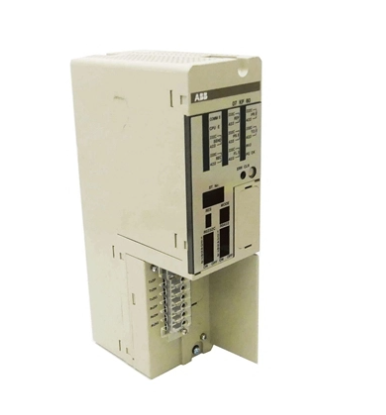
ABB SPHSS13 Hydraulic Servo Module
ABB SPHSS13 Hydraulic Servo Module
Product overview
ABB SPHHS13 is a high-performance hydraulic servo module designed specifically for industrial hydraulic control systems, belonging to ABB's rich industrial automation product line. It is mainly suitable for Harmony Rack systems and plays a key role in many industrial scenarios. For example, in terms of turbine control, it can accurately regulate the opening of the steam valve of the turbine, effectively control the speed and output power of the turbine, and ensure stable power output; In wind turbine control, the pitch angle can be precisely adjusted based on environmental factors such as wind speed to achieve efficient utilization of wind energy. In addition, among various industrial automation equipment that require strict precision in position, speed, and torque control, SPHHS13 can also demonstrate its capabilities, providing strong support for the stable operation and precise control of the equipment.
Specification parameters
Physical specifications: The module size is exquisite, with a length of 297.18mm, a height of 35.56mm, a width of 175.26mm, and a weight of approximately 0.272kg or 0.28kg. This compact design enables it to flexibly adapt to various spatial conditions during equipment installation and layout, greatly reducing the occupation of internal space of the equipment and reducing the overall load of the equipment, which is conducive to efficient operation and convenient maintenance of the equipment.
Electrical parameters: The rated input voltage has good compatibility, generally 24V DC, and some data shows that it also supports 48V DC, with a power consumption of 25W. This electrical parameter design not only meets the power requirements for stable and efficient operation of the module itself, but also works within a reasonable energy consumption range, meeting the dual requirements of energy conservation and stable operation in industrial production.
Environmental adaptability parameters: The working and storage temperature ranges from -40 ° C to+85 ° C, demonstrating strong temperature adaptability. It can operate stably in both harsh outdoor environments and high-temperature industrial workshops. The protection level reaches IP67, with excellent dustproof and waterproof performance, which can effectively resist the erosion of external factors such as dust and water vapor, adapt to various harsh and complex industrial environments, ensure reliable operation under extreme working conditions, and maintain stable system operation.
Core functions
Redundant design ensures reliability: Equipped with redundant servo coils, this design is a key manifestation of its high reliability. During normal operation, two servo coils work together. When one coil fails due to electrical short circuit, overheating, or other reasons, the other coil can quickly and seamlessly take over the work, ensuring uninterrupted system control signals, maintaining stable operation of the hydraulic system, effectively avoiding system shutdown caused by key component failures, greatly improving the reliability and fault tolerance of the system, ensuring the continuity of industrial production, and reducing economic losses caused by equipment failures.
Multi sensor support: compatible with AC and DC linear variable differential transformers (LVDT). LVDT, as a high-precision displacement sensor, is commonly used in industrial production to accurately measure the position changes of mechanical components. SPHSS13 can adapt to different types of LVDTs and flexibly select the most suitable sensor for precise measurement and control based on actual measurement scenarios and accuracy requirements, providing rich choices for accurate measurement and control, meeting diverse measurement and control needs in complex industrial environments, and ensuring precise monitoring and control of hydraulic systems.
Flexible control mode: It has two control modes: proportional integral (PI) and pure proportional (P). In PI control mode, the module can effectively eliminate system static errors through proportional and integral calculations of system deviations, making the control process more precise and stable. It is particularly suitable for scenarios that require extremely high control accuracy and long-term stable operation, such as hydraulic control systems for precision machine tools. The pure proportional (P) control mode has an extremely fast response speed and can quickly adjust the control quantity according to changes in the system input signal. It plays a key role in situations where response speed is demanding and sudden changes need to be quickly responded to, such as hydraulic control of high-speed stamping equipment. It can quickly and accurately adjust the control strategy according to actual working conditions.
Working principle
Signal input and processing: External control signals, such as command signals from the automation control system, as well as real-time status signals of the hydraulic system detected by various sensors (such as position signals fed back by LVDT sensors, pressure signals transmitted by pressure sensors, etc.), are input together into the SPHHS13 module. The signal conditioning circuit inside the module will preprocess these input signals, such as filtering to remove noise interference from the signal, amplifying the signal amplitude to an appropriate range, ensuring the accuracy and stability of the signal, and providing reliable data basis for subsequent precise control operations.
Control operation and decision-making: The conditioned signal is transmitted to the microprocessor in the module core. The microprocessor performs complex operations on input signals based on preset control algorithms and the currently selected control mode (PI or P mode). For example, in PI control mode, the microprocessor continuously calculates the deviation between the actual state and the target state of the system, responds quickly to the deviation through a proportional term, adjusts the control quantity, and accumulates the deviation over a period of time through an integral term to eliminate system static errors and comprehensively obtain accurate control instructions to achieve precise control of the hydraulic system.
Signal output and execution: The control instructions generated by the microprocessor are output in the form of electrical signals to the servo valve drive circuit. The driving circuit amplifies the weak control signal and converts it into a strong electrical signal sufficient to drive the servo valve action. Servo valves accurately adjust the flow rate and direction of hydraulic oil based on received signals, thereby controlling the action of hydraulic actuators (such as hydraulic cylinders, hydraulic motors, etc.), achieving precise control of parameters such as pressure, flow rate, and position of the hydraulic system, and enabling industrial equipment to operate according to expected goals and accuracy.
Precautions
Installation environment: It must be installed in a dry and well ventilated place, away from water sources, steam, and corrosive gases, to prevent the module from experiencing a decrease in electrical performance or hardware damage due to moisture and corrosion. At the same time, it is necessary to avoid strong electromagnetic interference sources, such as large motors, frequency converters, and other equipment. If it cannot be avoided, effective electromagnetic shielding measures should be taken, such as using metal shielding covers to shield the module to ensure its normal operation and avoid electromagnetic interference.
Electrical connection: Strictly follow the product manual for electrical wiring, ensure the correct polarity of the power supply, and ensure that the input and output signal cables are firmly connected and well shielded. Use cables that meet the specifications, and the cross-sectional area of the cables should be able to meet the current transmission requirements, avoiding problems such as heating and excessive voltage drop caused by thin cables. For communication cables, it is necessary to follow the wiring specifications of relevant communication protocols. For example, PROFIBUS communication cables should use shielded twisted pair cables, and the terminals should be correctly connected to 120 Ω terminal resistors to ensure stable and reliable communication.
Parameter setting: When using or changing application scenarios for the first time, professional technicians should carefully set module parameters based on actual working conditions, using ABB's matching programming software or debugging tools, such as control mode selection, sensor type configuration, control parameter (proportional coefficient, integration time, etc.) adjustment, etc. Incorrect parameter settings may lead to unstable system operation, decreased control accuracy, and even equipment damage. After the setup is completed, comprehensive debugging and testing are required to ensure that the module works properly and meets actual production needs.
Maintenance: Regularly inspect the appearance of the module to check for abnormal conditions such as dust accumulation, loose components, and damaged cables. If any are found, they should be cleaned, tightened, or replaced in a timely manner. Every certain period (such as six months or one year, depending on the actual usage environment and frequency), professional testing equipment is used to test the electrical performance of the module, including the accuracy of input and output signals, power stability, etc., in order to timely detect potential faults and hidden dangers. When a module malfunctions, it is necessary to first consult the fault code manual, analyze the cause of the fault, and avoid blind disassembly and repair. If it cannot be resolved by oneself, it is necessary to contact ABB's professional after-sales technical support personnel for repair and treatment.
Similar model supplement
SPHSS12
Fewer channels, more compact size, and relatively lower price
Suitable for small industrial equipment with less demand for control channels, limited equipment space, and tight budgets, such as local hydraulic control units for small hydraulic machine tools and simple automated production lines
SPHSS15
It has higher control accuracy, supports more types of sensor access, and has richer functions, but the cost is relatively high
Mainly used in high-end industrial fields with extremely high requirements for control accuracy and functional diversity, such as ultra precision hydraulic control of semiconductor manufacturing equipment, microfluidic hydraulic control in high-end medical device production, etc
SPHSS13A
On the basis of SPHHSS13, the heat dissipation design has been optimized to adapt to working environments with higher temperatures
Suitable for industrial scenarios with high ambient temperatures, such as high-temperature workshops in steel smelters and hydraulic control systems around furnaces in glass manufacturing enterprises, to ensure stable operation in high-temperature environments
- YOKOGAWA
- Reliance
- ADVANCED
- SEW
- ProSoft
- WATLOW
- Kongsberg
- FANUC
- VSD
- DCS
- PLC
- man-machine
- Covid-19
- Energy and Gender
- Energy Access
- Renewable Integration
- Energy Subsidies
- Energy and Water
- Net zero emission
- Energy Security
- Critical Minerals
- A-B
- petroleum
- Mine scale
- Sewage treatment
- cement
- architecture
- Industrial information
- New energy
- Automobile market
- electricity
- Construction site
- HIMA
- ABB
- Rockwell
- Schneider Modicon
- Siemens
- xYCOM
- Yaskawa
- Woodward
- BOSCH Rexroth
- MOOG
- General Electric
- American NI
- Rolls-Royce
- CTI
- Honeywell
- EMERSON
- MAN
- GE
- TRICONEX
- Control Wave
- ALSTOM
- AMAT
- STUDER
- KONGSBERG
- MOTOROLA
- DANAHER MOTION
- Bentley
- Galil
- EATON
- MOLEX
- Triconex
- DEIF
- B&W
- ZYGO
- Aerotech
- DANFOSS
- KOLLMORGEN
- Beijer
- Endress+Hauser
- schneider
- Foxboro
- KB
- REXROTH
- YAMAHA
- Johnson
- Westinghouse
- WAGO
- TOSHIBA
- TEKTRONIX
- BENDER
- BMCM
- SMC
- HITACHI
- HIRSCHMANN
- XP POWER
- Baldor
- Meggitt
- SHINKAWA
- Other Brands
- UniOP
- KUKA
- IBA
- Beckhoff
- ADLINK
-
Siemens 6SL3244-0SA01-1AA0 - SINAMICS G120 Control Unit
-
DANFOSS 175Z2688 - COATEDE CONTROLUNIT VLT5000
-
SIEMENS 6FM1721-3AA20 - Positioning Module
-
REXORTH VTS0605 PVAR S21 - Drive Module
-
BECKHOFF 2915-0000 - Control Module
-
COOPER EATON CGLine 400 40071347901 - CEAG CG Controller
-
SIEMENS 3UF5031-3AN00-1 - SIMOCODE DP Basic Unit
-
SIGMATEK DNC305 05-011-305 - Drive Controller
-
Multivac MV1 10249768 - Control Module
-
SCHNEIDER ELECTRIC MES114 59646 & 59645 - Circuit Breaker Accessory
-
CAMILLE BAUER CAPAX 44-580-0012 - Transmitter
-
HENGSTLER VT360P LS1/TOK - Encoder
-
BURKERT 8792 - 24V DC IP65 / IP67 Positioner
-
SENSOPART V10-OB-A1-W6 - Vision Sensor
-
ALLEN-BRADLEY 1762-L40BXB SER.C REV.J - MicroLogix 1200 Controller
-
HITACHI CPU22-02HC 33025801-2 - CPU Module
-
HITACHI AGH-0 33034810-2 - Control Board
-
PHILIPS AIH110 VER 1.0 - Control Module
-
BAUMULLER DO8000 - Drive Controller
-
B&R PS477 3PS477.9 Rev.C0 - Power Supply
-
ABB ALFA LAVAL 200-CISB - Communication Interface 2 x SatBus
-
Moeller MI4-570-TA1 - HMI Operator Panel
-
ABB ACH550-01-06A9-4+B055 - Variable Frequency Drive
-
ABB TPU2 3HNE00313-1 REV 12 - Teach Pendant Unit
-
Schneider Electric BRS368H130ABA - Stepper Motor
-
Foxboro FCM100E P0972ZA - I/A Series Communication Module
-
Siemens 6ES7 450-1AP00-0AE0 6ES7450-1AP00-0AE0 - Simatic S7 Version:04 Counter Module
-
Schneider Electric ATV320U07N4W - Altivar Machine Drive
-
Priva TouchPoint Flush V06:02 5060002 - Control Panel
-
Lenze ESMD402L4TXA - 4kW SMD Inverter Drive
-
Lenze ESMD402L4TXA - 4kW SMD Inverter Drive
-
Schneider Electric PM210 PM210MG - Powerlogic Power Meter
-
ASCOM U982-DB/1C U982 - Power Supply / Communication Module
-
DYADIC SYSTEMS SCN5-010-050-S03-NA - Servo Cylinder
-
Reliance Electric GMI-S04 - AC/AC CONVERTER 380/400V 50/60Hz 3.9/5.2A
-
Pro-Face GLC150-BG41-XY32KF-24V 3080060 PFXGLC150BDBP - Touch Screen HMI
-
ROFIN RSL TERMINAL V2 0185.01/03 - TERMINAL
-
HONEYWELL R7241E1077 - Burner Control / Amplifier
-
SEW MM22C-503-00 8241201 - 2.2kW Movimot Drive
-
Brand Digital III 50mL - Burette
-
Danfoss 195N0039 VLT2811PS2B20STR1DBF00A00C0 - 2.4kVA VLT Drive
-
SONY LG10-2 EK1 - Digital Gauge Indicator
-
EMERSON SKD3400750 - 7.5kW AC Drive
-
SIEMENS 6AV6 542-0AG10-0AX0 - MULTIPANEL HMI
-
TELEMECANIQUE ATV21HU55N4 - ALTIVAR21 5.5KW Variable Speed Drive
-
MITSUBISHI A985GOT-TBA-EU - GOT900 Touch Screen HMI
-
SCHNEIDER LXM32AD30N4 - Lexium 32 Servo Drive
-
SICK PSR01-1501 M20Z-02550A122 - Safety Laser Scanner
-
GECMA CHALLENGER 15-2-FMO - LITE TOUCH Monitor
-
Uniop EK02 6ZA982 - HMI Operator Panel
-
TELEMECANIQUE ATV18U54M2 - SQUARE D ALTIVAR 18 3kW Drive
-
Schneider Electric ATV312HU75S6 - 7.5kW Altivar 312 Drive
-
Siemens 6GK7243-5DX30-0XE0 6GK7 243-5DX30-0XE0 - Communications Processor
-
Schneider Electric LV432455 VIGI630 - 3POLE Earth Leakage Module
-
Rexroth PSI 6100.750 L1 R911170694-107 - frequency inverter / inverter
-
SWEDISH MICROWAVE AB Ku-Band BDC 138010-45-D0 - Block Downconverter
-
METTLER TOLEDO IND429 IND429-BB30 - Weighing Terminal
-
Siemens 6SL3210-5HE10-4UF0 - Sinamics V90 Servo Drive
-
B&R X20CP0482 Rev.D0 - X20 CPU Module
-
Mitsubishi FR-E720S-110SC-EC FRE720S110SCEC - 31A~11A Drive With Filter
-
ABB ACH580-01-026A-4 - Variable Frequency Drive
-
Siemens 6SL3210-1KE13-2AP1 - SINAMIC G120CDP 1.1kw Drive
-
Schneider Electric TM250D 4P3D LV431440 - Compact NSX250 Circuit Breaker
-
RELIANCE ELECTRIC GD.722.81.00-A 802288-74C - MAXITRON Servo Control Card
-
Uniop EK02 6ZA982 - HMI Operator Panel
-
Siemens 6SE9113-7JA13 - MICRO MASTER Junior 1.5kW Inverter
-
Mitsubishi FR-E720S-110SC-EC FRE720S110SCEC - 31A~11A Drive with Filter
-
Johnson Controls FEC2621 MS-FEC2621-0 - Field Equipment Controller
-
BENDER IR475LYT-429 - A-ISOMETER Insulation Monitor
-
Berger lahr D550 RS15 22.550-00-30b - Stepper Drive
-
Rexroth PSI 6100.750 L1 R911170694-107 - Frequency Inverter / INVERTER
-
KOYO 205 D2-06B-1 D2-240 H2-ECOM D2-08ND3 F2-08TRS - DIRECT LOGIC PLC WITH MODULE
-
TELEMECANIQUE ATV18U54M2 ATV18U54M - SQUARE D ALTIVAR 18 3kW Drive
-
Lenze 471-E1.D - Board / Controller Speed
-
Mitsubishi FR-A740-00038-EC - Frequency Inverter
-
Johnson Controls IOM3723 MS-IOM3723-0 - Input/Output Module
-
CURTIS 1238-5602 - AC Motor Controller
-
FOXBORO P0912XX REV.A - 220VAC Power Supply
-
Siemens 6SE9113-7JA13 - MICRO MASTER Junior 1.5kW Inverter
-
Mitsubishi FR-A740-00038-EC - Frequency Inverter
-
KOYO 205 D2-06B-1 D2-240 H2-ECOM D2-08ND3 F2-08TRS - DIRECT LOGIC PLC WITH MODULE
-
AUTZ M406D-00101 - Servo Motor
-
Lauer PCS095 PG095.508.BB - Operator Panel
-
ABB SCOP45SB/DX232 - SattCon OP45 SB Operator Panel
-
SEW Eurodrive MCH42A0030-5A3-4-00 MDX60A0030-5A3-4-00 - 4.8kVA Movidrive Inverter
-
BENDER IR475LYT-429 - A-ISOMETER Insulation Monitor
-
Johnson Controls FEC2621 MS-FEC2621-0 - Field Equipment Controller
-
Johnson Controls IOM3723 MS-IOM3723-0 - Input/Output Module
-
Berger lahr D550 RS15 22550-00-30b - Stepper Drive
-
SIEMENS 6FX1120-4BD03 6FX11204BD03 5702049304.00 E-Stand: A - Sinumerik Module
-
Allen-Bradley 1771-NIV B - HIGH RESOLUTION ISOLATED ANALOG SERIES Module
-
HONEYWELL XFC2D06001 - Flow Computer / Controller
-
Contraves Varidyn Compact ADB 380.90M - DC Drive 380v - 400v 90A 50kVA
-
Red Lion Control GEM52000 - Control Module
-
Siemens 6ES5 955-3NC13 - modular power supply TYPE:DIN41752
-
Danfoss ICV50 G20Mn50T / 027H5200 - Valve zaw
-
Eberle PLS508 P-814 / 2X EA-88 / A-812 / MT-81 / S-11 - PLC with Modules
-
Siemens 6ES7 314-6CF01-0AB0 6ES7314-6CF01-0AB0 - SIMATIC CPU314C-2 DP
-
EBERLE EM-525-87 EM52487 - ICE DETECTOR BASE UNIT
-
Telemecanique / Schneider TSXRKZ02 - TSX Micro automation plus 7module
-
B&R 5DLSDL.1001-00 - Display Link Receiver
-
Siemens 6FX1120-4BD03 6FX11204BD03 5702049304.00 E-Stand: A - Sinumerik Module
-
ALLEN-BRADLEY 1771-NIV A - HIGH RESOLUTION ISOLATED ANALOG SERIES Module
-
ALLEN-BRADLEY 1771-NIV B - HIGH RESOLUTION ISOLATED ANALOG SERIES Module
-
Contraves Varidyn Compact ADB 380.90M - DC Drive 380V - 400V 90A 50kVA
-
Contraves Varidyn Compact ADB 380.90M - DC Drive 380V - 400V 90A 50kVA
-
Ropex RES-202 - Resistron Temperature Controller
-
HONEYWELL XFC2D06001 - Flow Computer / Controller
-
Telemechanics ATV452U40 - DIMMER ALTIVAR5 SERIES 452 4kW 5HP Frequency Inverter
-
VEGA VEGAPLUS61 PS61.XXAGPHAMAX - Radar Level Sensor
-
BRANSON ULTRASONIC TRANSDUCER - Ultrasonic Transducer
-
Danfoss ICV50 G20Mn50T / 027H5200 - Valve Valvola Zaw
-
Schneider Electric 2001549/1 GALAXY PW 5102851200 NT07 - panler card
-
REXROTH VT3006-36 A - Proportional Valve Amplifier
-
Allen-Bradley 1746-OBP16 SERIES:C - SLC 500 OUTPUT MODULE
-
SCHNEIDER LXM32MD12N4 - Lexium 32 Servo Drive
-
Schneider Electric ATV630U22N4 - 2.2KW Altivar Process Drive
-
Allen-Bradley 1746-OBP16 SERIES:C - SLC 500 OUTPUT MODULE
-
Vanderlande 0E2550-00002... - Bagtrax Integrated Power Module 400V 32A
-
B&R X20CP0410 Rev.D0 - X20 CPU Module
-
VANDERLANDE 0E2550-00002 02EDD2B0100 - BAGTRAX Integrated Power Module 400V 32A
-
Rexroth R061205010 - Linear Bushing / Bearing
-
INDRAMAT TVM1.2-50-220/300-W0-220/380 - Power Supply Module
-
Vanderlande 0E2550-00002... - Bagtrax Integrated Power Module 400V 32A
-
HOMAG KEB 07F5S1A-YA00 09E5T60-1001 - Combivert Inverter WITH KEYPAID AND FILTER
-
Siemens 3RW3047-1BB14 - Soft Starter
-
Sumitomo AF-500 AF502-A40 - 0.4kW Transistor Inverter
-
Sumitomo AF-500 AF502-A40 - 0.4kW Transistor Inverter

K-JIANG

Add: Jimei North Road, Jimei District, Xiamen, Fujian, China
Tell:+86-15305925923