

K-WANG


Foxboro I/A Series Industrial Automation System
Foxboro I/A Series Industrial Automation System
Product basic information
Key content of the project
Product Name Foxboro I/A Series Industrial Automation System
Belonging to Foxboro (a brand under Invensys)
Core positioning: The world's first open industrial system, an automation control solution for industrial manufacturing processes
The core architecture concept is to build modules with "nodes" as the core, achieving flexible deployment and expansion
Key certifications and standards follow international/industrial standards such as ISO, IEEE, Factory Mutual, EEC, ISA, ISO9001, etc
More than 100 types of smart factory equipment have been integrated
Core advantages
(1) Open and compatible architecture with strong adaptability
Wide scale adaptation: Supports small systems that handle local devices, as well as large complex systems distributed across local and wide area networks, covering diverse application scenarios.
Flexible combination of modules: hardware and software modules can be freely matched, and system functions can be customized according to application requirements and installation locations, without being limited by fixed configurations.
Truly distributed deployment: Implementing a dual distributed design at both the functional and physical levels, where each node operates independently and can collaborate with the network, enhancing system stability and response efficiency.
Open compatibility features:
Adhere to OSI communication standard model, IEEE 802.4 and other network standards, do not rely on proprietary communication networks, and support integration with third-party devices/systems;
Having backward compatibility to protect users' existing investments in system integration and applications;
Support third-party application access and provide unlimited functional flexibility for expansion.
(2) Modular design, reducing the whole life cycle cost
Easy installation and maintenance: The hardware module adopts a sturdy packaging design, which can withstand the harsh conditions of industrial environments (environmental, electrical, physical aspects); The module has intelligent self checking function, which automatically detects each other after being connected to the system. When there is a fault, the problem is accurately located through color coded indicator lights and messages.
Quick replacement and upgrade: After replacing the faulty module, the system will automatically download the adaptation software without the need for complex configuration; Small systems can gradually expand into integrated automation and information systems at the factory level, adapting to business growth and budget planning.
The total cost is controllable: the entire process cost from installation, training, operation to maintenance is relatively low, modular design reduces redundant investment, rapid fault repair reduces downtime losses.
(3) High reliability, ensuring continuous operation
Fault tolerance capability: Key functions can add redundant hardware modules (including LAN/WAN communication redundancy), which are completely transparent to software and enable instantaneous switching, enhancing the system's ability to withstand faults.
Network fault detection: equipped with network fault detection function, further enhancing system reliability and fault diagnosis efficiency, reducing downtime.
(4) User friendly operation and excellent interactive experience
Adopting high-quality, high-resolution graphical interface and multi window design, the operating interface is unified, safe, and friendly;
The 50 series workstation enhances graphics and window functions, supports concurrent access to multiple applications, and improves operational efficiency;
Interactive elements such as menus and graphics can be configured according to the needs of operators to adapt to different job scenarios.
System architecture and core modules
(1) Core architecture: centered around "nodes"
Nodes are the basic building units of a system, capable of independent operation and execution of automation related functions, and can also connect to other Foxboro or non Foxboro nodes through compatible networks.
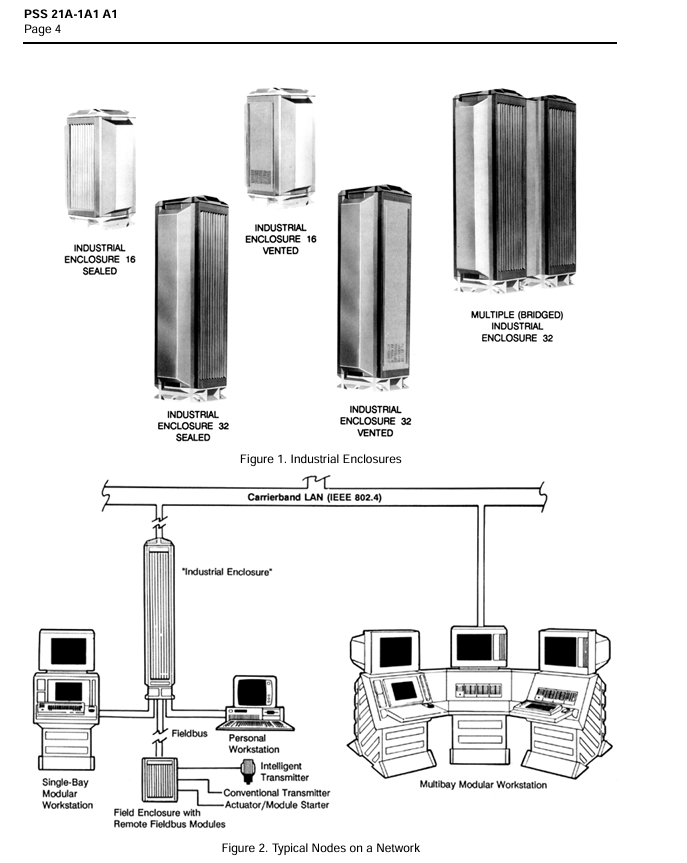
A typical node typically consists of a set of book sized modules, workstations, and field devices inside an industrial chassis. The modules are interconnected through Nodebus (a robust serial bus) and can be connected to peripheral devices or other modules through various communication links.
(2) Core module type
1. Processor modules (four major categories)
Module Type Core Function Connection Device/Network
Application processors for historical data collection and archiving, database management, coordination with other processor modules (such as distributed batch control systems), high-capacity storage devices, information networks (such as Ethernet, supporting bidirectional information transmission)
Workstation processors provide interface support, receive and display X Window display CRT, keyboard, alarm keyboard, and other workstation devices and information networks (such as Ethernet) from other computers
Communications processors/interfaces/gateways enable cross device/cross network communication adaptation to RS232/485 devices, local area networks (LAN), wide area networks (WAN), SPECTRUM, and other networks
Control processors execute control logic (such as ladder logic, regulating control, sequential control) for I/A Series fieldbus modules and devices
2. Fieldbus Module
Core function: Connect traditional sensors, actuators, and I/A Series intelligent field devices, serving as a communication bridge between field devices and control processors.
(3) Network and Communication
Communication foundation: Following the Open Systems Interconnection (OSI) standard model and adopting communication standards specified by ISO and IEEE;
Network type: Nodes communicate through a single level or layered IEEE 802.4 network, rather than a proprietary network;
Supporting protocols/networks: TCP/IP, DECnet, NFS and other information network protocols, as well as fieldbus (supporting communication between control processors and remote fieldbus modules/devices).
System scale and deployment form
System scale deployment form, core components
Small system independent personal workstation or single node personal workstation, or single node with a small number of modules
Large scale system multi node distributed deployment with multiple nodes connected via IEEE 802.4 compatible carrier band LAN, enabling geographic distributed deployment of instrument equipment and functions through fieldbus
Modular expansion gradually expands from small-scale systems, gradually adding modules and nodes according to production needs and budgets, and upgrading to a factory level integrated system
Key issues
Question 1: What are the core architectural advantages of Foxboro I/A Series system? How to support its positioning as an "open industrial system"?
Answer: The advantages of core architecture are reflected in three aspects: modular design with "nodes" as the core, open features that follow international standards, and truly distributed deployment. The key to supporting the positioning of "open industrial systems" is to comply with international standards such as ISO, IEEE, OSI, etc., adopt non proprietary communication networks (IEEE 802.4), and seamlessly integrate with third-party devices/systems; Secondly, it supports flexible mixing of hardware and software modules, adapting to diverse scenarios ranging from small to large distributed systems; The third is to have backward compatibility, protect existing investments, and support third-party application access. It can integrate over 100 types of smart factory equipment and continue to expand with technological development.
Question 2: What are the key designs of Foxboro I/A Series system in terms of reliability and operational convenience?
Answer: Reliability design: ① The module adopts sturdy packaging and can withstand harsh industrial environments; ② Equipped with module self detection function, it can accurately locate faults through color coded indicator lights and messages; ③ Redundant hardware configuration that supports critical functions, with hardware redundancy completely transparent to software and instantaneous switching completion; ④ Equipped with network fault detection function to improve the efficiency of fault diagnosis. Convenient operation and maintenance design: ① Modular design, easy installation and replacement, automatic download of adaptation software after replacing faulty modules; ② The system can be modularized and gradually expanded without the need for a one-time large-scale investment; ③ The user interface is unified and friendly, supporting multi window and menu based configuration, reducing training costs.
Question 3: What are the types of processor modules in the Foxboro I/A Series system? What are their respective core functions and connection objects?
Answer: Processor modules are divided into four categories, as follows:
Module Type Core Function Connection Object
Application processor historical data collection and archiving, database management, coordination with other processor modules, high-capacity storage devices, Ethernet and other information networks
The workstation processor provides interface support, displays cross device X Window CRT, keyboard, alarm keyboard and other workstation devices, Ethernet and other information networks
Communication processors/interfaces/gateways enable cross device and cross network communication adaptation to RS232/485 devices, LAN/WAN, SPECTRUM, and other networks
Control processor executes control functions such as ladder logic, adjustment control, sequence control, etc. I/A Series fieldbus modules and equipment
- YOKOGAWA
- Reliance
- ADVANCED
- SEW
- ProSoft
- WATLOW
- Kongsberg
- FANUC
- VSD
- DCS
- PLC
- man-machine
- Covid-19
- Energy and Gender
- Energy Access
- Renewable Integration
- Energy Subsidies
- Energy and Water
- Net zero emission
- Energy Security
- Critical Minerals
- A-B
- petroleum
- Mine scale
- Sewage treatment
- cement
- architecture
- Industrial information
- New energy
- Automobile market
- electricity
- Construction site
- HIMA
- ABB
- Rockwell
- Schneider Modicon
- Siemens
- xYCOM
- Yaskawa
- Woodward
- BOSCH Rexroth
- MOOG
- General Electric
- American NI
- Rolls-Royce
- CTI
- Honeywell
- EMERSON
- MAN
- GE
- TRICONEX
- Control Wave
- ALSTOM
- AMAT
- STUDER
- KONGSBERG
- MOTOROLA
- DANAHER MOTION
- Bentley
- Galil
- EATON
- MOLEX
- Triconex
- DEIF
- B&W
- ZYGO
- Aerotech
- DANFOSS
- KOLLMORGEN
- Beijer
- Endress+Hauser
- schneider
- Foxboro
- KB
- REXROTH
- YAMAHA
- Johnson
- Westinghouse
- WAGO
- TOSHIBA
- TEKTRONIX
- BENDER
- BMCM
- SMC
- HITACHI
- HIRSCHMANN
- XP POWER
- Baldor
- Meggitt
- SHINKAWA
- Other Brands
- UniOP
- KUKA
- IBA
- Beckhoff
- ADLINK
-
Siemens 6SL3244-0SA01-1AA0 - SINAMICS G120 Control Unit
-
DANFOSS 175Z2688 - COATEDE CONTROLUNIT VLT5000
-
SIEMENS 6FM1721-3AA20 - Positioning Module
-
REXORTH VTS0605 PVAR S21 - Drive Module
-
BECKHOFF 2915-0000 - Control Module
-
COOPER EATON CGLine 400 40071347901 - CEAG CG Controller
-
SIEMENS 3UF5031-3AN00-1 - SIMOCODE DP Basic Unit
-
SIGMATEK DNC305 05-011-305 - Drive Controller
-
Multivac MV1 10249768 - Control Module
-
SCHNEIDER ELECTRIC MES114 59646 & 59645 - Circuit Breaker Accessory
-
CAMILLE BAUER CAPAX 44-580-0012 - Transmitter
-
HENGSTLER VT360P LS1/TOK - Encoder
-
BURKERT 8792 - 24V DC IP65 / IP67 Positioner
-
SENSOPART V10-OB-A1-W6 - Vision Sensor
-
ALLEN-BRADLEY 1762-L40BXB SER.C REV.J - MicroLogix 1200 Controller
-
HITACHI CPU22-02HC 33025801-2 - CPU Module
-
HITACHI AGH-0 33034810-2 - Control Board
-
PHILIPS AIH110 VER 1.0 - Control Module
-
BAUMULLER DO8000 - Drive Controller
-
B&R PS477 3PS477.9 Rev.C0 - Power Supply
-
ABB ALFA LAVAL 200-CISB - Communication Interface 2 x SatBus
-
Moeller MI4-570-TA1 - HMI Operator Panel
-
ABB ACH550-01-06A9-4+B055 - Variable Frequency Drive
-
ABB TPU2 3HNE00313-1 REV 12 - Teach Pendant Unit
-
Schneider Electric BRS368H130ABA - Stepper Motor
-
Foxboro FCM100E P0972ZA - I/A Series Communication Module
-
Siemens 6ES7 450-1AP00-0AE0 6ES7450-1AP00-0AE0 - Simatic S7 Version:04 Counter Module
-
Schneider Electric ATV320U07N4W - Altivar Machine Drive
-
Priva TouchPoint Flush V06:02 5060002 - Control Panel
-
Lenze ESMD402L4TXA - 4kW SMD Inverter Drive
-
Lenze ESMD402L4TXA - 4kW SMD Inverter Drive
-
Schneider Electric PM210 PM210MG - Powerlogic Power Meter
-
ASCOM U982-DB/1C U982 - Power Supply / Communication Module
-
DYADIC SYSTEMS SCN5-010-050-S03-NA - Servo Cylinder
-
Reliance Electric GMI-S04 - AC/AC CONVERTER 380/400V 50/60Hz 3.9/5.2A
-
Pro-Face GLC150-BG41-XY32KF-24V 3080060 PFXGLC150BDBP - Touch Screen HMI
-
ROFIN RSL TERMINAL V2 0185.01/03 - TERMINAL
-
HONEYWELL R7241E1077 - Burner Control / Amplifier
-
SEW MM22C-503-00 8241201 - 2.2kW Movimot Drive
-
Brand Digital III 50mL - Burette
-
Danfoss 195N0039 VLT2811PS2B20STR1DBF00A00C0 - 2.4kVA VLT Drive
-
SONY LG10-2 EK1 - Digital Gauge Indicator
-
EMERSON SKD3400750 - 7.5kW AC Drive
-
SIEMENS 6AV6 542-0AG10-0AX0 - MULTIPANEL HMI
-
TELEMECANIQUE ATV21HU55N4 - ALTIVAR21 5.5KW Variable Speed Drive
-
MITSUBISHI A985GOT-TBA-EU - GOT900 Touch Screen HMI
-
SCHNEIDER LXM32AD30N4 - Lexium 32 Servo Drive
-
SICK PSR01-1501 M20Z-02550A122 - Safety Laser Scanner
-
GECMA CHALLENGER 15-2-FMO - LITE TOUCH Monitor
-
Uniop EK02 6ZA982 - HMI Operator Panel
-
TELEMECANIQUE ATV18U54M2 - SQUARE D ALTIVAR 18 3kW Drive
-
Schneider Electric ATV312HU75S6 - 7.5kW Altivar 312 Drive
-
Siemens 6GK7243-5DX30-0XE0 6GK7 243-5DX30-0XE0 - Communications Processor
-
Schneider Electric LV432455 VIGI630 - 3POLE Earth Leakage Module
-
Rexroth PSI 6100.750 L1 R911170694-107 - frequency inverter / inverter
-
SWEDISH MICROWAVE AB Ku-Band BDC 138010-45-D0 - Block Downconverter
-
METTLER TOLEDO IND429 IND429-BB30 - Weighing Terminal
-
Siemens 6SL3210-5HE10-4UF0 - Sinamics V90 Servo Drive
-
B&R X20CP0482 Rev.D0 - X20 CPU Module
-
Mitsubishi FR-E720S-110SC-EC FRE720S110SCEC - 31A~11A Drive With Filter
-
ABB ACH580-01-026A-4 - Variable Frequency Drive
-
Siemens 6SL3210-1KE13-2AP1 - SINAMIC G120CDP 1.1kw Drive
-
Schneider Electric TM250D 4P3D LV431440 - Compact NSX250 Circuit Breaker
-
RELIANCE ELECTRIC GD.722.81.00-A 802288-74C - MAXITRON Servo Control Card
-
Uniop EK02 6ZA982 - HMI Operator Panel
-
Siemens 6SE9113-7JA13 - MICRO MASTER Junior 1.5kW Inverter
-
Mitsubishi FR-E720S-110SC-EC FRE720S110SCEC - 31A~11A Drive with Filter
-
Johnson Controls FEC2621 MS-FEC2621-0 - Field Equipment Controller
-
BENDER IR475LYT-429 - A-ISOMETER Insulation Monitor
-
Berger lahr D550 RS15 22.550-00-30b - Stepper Drive
-
Rexroth PSI 6100.750 L1 R911170694-107 - Frequency Inverter / INVERTER
-
KOYO 205 D2-06B-1 D2-240 H2-ECOM D2-08ND3 F2-08TRS - DIRECT LOGIC PLC WITH MODULE
-
TELEMECANIQUE ATV18U54M2 ATV18U54M - SQUARE D ALTIVAR 18 3kW Drive
-
Lenze 471-E1.D - Board / Controller Speed
-
Mitsubishi FR-A740-00038-EC - Frequency Inverter
-
Johnson Controls IOM3723 MS-IOM3723-0 - Input/Output Module
-
CURTIS 1238-5602 - AC Motor Controller
-
FOXBORO P0912XX REV.A - 220VAC Power Supply
-
Siemens 6SE9113-7JA13 - MICRO MASTER Junior 1.5kW Inverter
-
Mitsubishi FR-A740-00038-EC - Frequency Inverter
-
KOYO 205 D2-06B-1 D2-240 H2-ECOM D2-08ND3 F2-08TRS - DIRECT LOGIC PLC WITH MODULE
-
AUTZ M406D-00101 - Servo Motor
-
Lauer PCS095 PG095.508.BB - Operator Panel
-
ABB SCOP45SB/DX232 - SattCon OP45 SB Operator Panel
-
SEW Eurodrive MCH42A0030-5A3-4-00 MDX60A0030-5A3-4-00 - 4.8kVA Movidrive Inverter
-
BENDER IR475LYT-429 - A-ISOMETER Insulation Monitor
-
Johnson Controls FEC2621 MS-FEC2621-0 - Field Equipment Controller
-
Johnson Controls IOM3723 MS-IOM3723-0 - Input/Output Module
-
Berger lahr D550 RS15 22550-00-30b - Stepper Drive
-
SIEMENS 6FX1120-4BD03 6FX11204BD03 5702049304.00 E-Stand: A - Sinumerik Module
-
Allen-Bradley 1771-NIV B - HIGH RESOLUTION ISOLATED ANALOG SERIES Module
-
HONEYWELL XFC2D06001 - Flow Computer / Controller
-
Contraves Varidyn Compact ADB 380.90M - DC Drive 380v - 400v 90A 50kVA
-
Red Lion Control GEM52000 - Control Module
-
Siemens 6ES5 955-3NC13 - modular power supply TYPE:DIN41752
-
Danfoss ICV50 G20Mn50T / 027H5200 - Valve zaw
-
Eberle PLS508 P-814 / 2X EA-88 / A-812 / MT-81 / S-11 - PLC with Modules
-
Siemens 6ES7 314-6CF01-0AB0 6ES7314-6CF01-0AB0 - SIMATIC CPU314C-2 DP
-
EBERLE EM-525-87 EM52487 - ICE DETECTOR BASE UNIT
-
Telemecanique / Schneider TSXRKZ02 - TSX Micro automation plus 7module
-
B&R 5DLSDL.1001-00 - Display Link Receiver
-
Siemens 6FX1120-4BD03 6FX11204BD03 5702049304.00 E-Stand: A - Sinumerik Module
-
ALLEN-BRADLEY 1771-NIV A - HIGH RESOLUTION ISOLATED ANALOG SERIES Module
-
ALLEN-BRADLEY 1771-NIV B - HIGH RESOLUTION ISOLATED ANALOG SERIES Module
-
Contraves Varidyn Compact ADB 380.90M - DC Drive 380V - 400V 90A 50kVA
-
Contraves Varidyn Compact ADB 380.90M - DC Drive 380V - 400V 90A 50kVA
-
Ropex RES-202 - Resistron Temperature Controller
-
HONEYWELL XFC2D06001 - Flow Computer / Controller
-
Telemechanics ATV452U40 - DIMMER ALTIVAR5 SERIES 452 4kW 5HP Frequency Inverter
-
VEGA VEGAPLUS61 PS61.XXAGPHAMAX - Radar Level Sensor
-
BRANSON ULTRASONIC TRANSDUCER - Ultrasonic Transducer
-
Danfoss ICV50 G20Mn50T / 027H5200 - Valve Valvola Zaw
-
Schneider Electric 2001549/1 GALAXY PW 5102851200 NT07 - panler card
-
REXROTH VT3006-36 A - Proportional Valve Amplifier
-
Allen-Bradley 1746-OBP16 SERIES:C - SLC 500 OUTPUT MODULE
-
SCHNEIDER LXM32MD12N4 - Lexium 32 Servo Drive
-
Schneider Electric ATV630U22N4 - 2.2KW Altivar Process Drive
-
Allen-Bradley 1746-OBP16 SERIES:C - SLC 500 OUTPUT MODULE
-
Vanderlande 0E2550-00002... - Bagtrax Integrated Power Module 400V 32A
-
B&R X20CP0410 Rev.D0 - X20 CPU Module
-
VANDERLANDE 0E2550-00002 02EDD2B0100 - BAGTRAX Integrated Power Module 400V 32A
-
Rexroth R061205010 - Linear Bushing / Bearing
-
INDRAMAT TVM1.2-50-220/300-W0-220/380 - Power Supply Module
-
Vanderlande 0E2550-00002... - Bagtrax Integrated Power Module 400V 32A
-
HOMAG KEB 07F5S1A-YA00 09E5T60-1001 - Combivert Inverter WITH KEYPAID AND FILTER
-
Siemens 3RW3047-1BB14 - Soft Starter
-
Sumitomo AF-500 AF502-A40 - 0.4kW Transistor Inverter
-
Sumitomo AF-500 AF502-A40 - 0.4kW Transistor Inverter

K-JIANG

Add: Jimei North Road, Jimei District, Xiamen, Fujian, China
Tell:+86-15305925923